Saturday, May 23, 2026

Binding.

 What Truly Binds India and Italy? A Journey Through Family, Faith, Food, and Feeling

Sometimes, cultures enter our lives quietly, almost unnoticed, only to reveal later that they have been accompanying us for years.

Italy did that for me.

My first encounter with Italy was not in Rome, Florence, or Venice. It was in India itself, in the corridors of a convent school run by gentle and disciplined nuns from Italy. As children, we may not have fully understood the geography that separated us from their homeland, but we absorbed something of their warmth, dedication, simplicity, and quiet strength.

Life moved on.

Then, nearly two decades later, I travelled to Italy. Walking through its towns, churches, bustling piazzas, homes, and markets, I experienced something unexpected. Italy felt foreign, yes — but also strangely familiar. Beneath the differences in language and landscape, I sensed echoes of India.

And recently, yet another thread was added to this tapestry. My grandson, who lives in Boston and is not yet a teenager, won a gold medal for his presentation on Italian culture.

India. Italy. America.

Three continents, three worlds — somehow meeting within one family story.

It made me ask a question: What truly binds India and Italy?

The answer, I suspect, lies not merely in history or diplomacy, but in deeper human values — family, memory, beauty, devotion, and feeling.

Ancient Civilizations That Still Speak to the Present

India and Italy are both heirs to ancient civilizations.

India carries the living inheritance of the Vedas, Upanishads, temples, epics, sacred traditions, and philosophical inquiry stretching across millennia.

Italy carries the grandeur of ancient Rome, the legacy of classical thought, magnificent cathedrals, Renaissance art, and centuries of cultural refinement.

Neither country treats the past as a dusty archive.

In both societies, the past is alive.

Old recipes survive. Festivals endure. Sacred places remain meaningful. Grandparents narrate stories. Traditions are not always preserved perfectly, but they continue to shape identity.

Modernity may rush ahead, but memory still has a respected seat at the table.

Family: The Emotional Centre of Life

Perhaps nowhere is the resemblance stronger than in the importance given to family.

Both Indian and Italian cultures place family close to the heart.

Meals are rarely only about food. They are gatherings of affection, conversation, laughter, debate, storytelling, and care.

Grandparents occupy cherished places.

Children are surrounded not merely by individuals, but by networks of relationships.

The structures may differ. The Indian joint family and the tightly knit Italian household are not identical. Yet the emotional impulse feels surprisingly similar — the instinct to belong, to gather, to celebrate together, and to remain connected across generations.

In many parts of the world, independence is prized above all else.

In India and Italy, relationships still carry a special gravity.

Food: Memory Served on a Plate

There are few cultures that speak about food with as much devotion as Indians and Italians.

In both traditions, cooking is not simply domestic work. It is inheritance.

Recipes carry stories.

Meals preserve history.

Hospitality is expressed through abundance.

A visitor is not merely offered nourishment but welcomed into the emotional world of the household.

Both cultures also take immense pride in regional diversity.

India delights in its dazzling variety — dosas, biryanis, dhoklas, puran polis, rasam, litti chokha, sandesh, and countless local treasures.

Italy too celebrates regional culinary identities — the flavours of Sicily, Tuscany, Naples, Lombardy, Emilia-Romagna and beyond.

Food becomes more than taste.

It becomes memory, belonging, and identity.

Faith, Ritual, and Sacred Beauty

Another deep meeting point lies in the realm of devotion.

India's spiritual landscape is filled with temples, chants, lamps, flowers, festivals, sacred music, rituals, and symbolic beauty.

Italy, too, is deeply marked by churches, bells, sacred art, saints, candles, hymns, pilgrimages, and centuries of religious expression.

Even when theological paths differ, there is a recognizable similarity in temperament.

Both cultures understand something profound:

Devotion can be beautiful.

The sacred is not hidden away in abstraction alone. It is expressed through architecture, colour, music, fragrance, sculpture, ceremony, and artistic care.

A flower offered before a deity in India and a candle lit inside an Italian church arise from different traditions, yet both reveal a human longing to express reverence through beauty.

The Love of Beauty and Artistic Expression

Italy is celebrated worldwide for art, sculpture, architecture, opera, and design.

India, too, breathes artistic abundance — temple architecture, dance, poetry, music, textiles, sculpture, storytelling traditions, and visual symbolism.

Neither culture is content with bare utility.

Beauty matters.

It nourishes the spirit.

Whether in a Renaissance painting, a Carnatic raga, a temple gopuram glowing in evening light, or an Italian cathedral ceiling painted centuries ago, one encounters a shared civilizational instinct: life is elevated by beauty.

Cultures of Feeling

There is another similarity that many travellers notice with a smile.

Neither Indians nor Italians are known for emotional restraint!

Warm conversations, expressive gestures, lively discussions, strong opinions, affectionate involvement in one another’s lives — these are familiar territories in both cultures.

Relationships matter deeply.

People matter deeply.

Emotion is not viewed as an inconvenience to be hidden away.

Perhaps this emotional openness creates an immediate sense of familiarity between the two peoples.

The Sacred Feminine: Another Quiet Bridge

During one of my visits to Boston, another unexpected connection revealed itself.

My grandson was reading a book on female goddesses. That reading itself became the inspiration for an article I wrote exploring parallels between India and Italy in their understanding of the sacred feminine.

At first glance, the comparison may seem surprising.

India’s spiritual imagination is richly populated with divine feminine forms — Lakshmi, Saraswati, Durga, Parvati, Kali and many others, each embodying dimensions of wisdom, compassion, abundance, protection, creativity, or transformative power.

Italy belongs largely to a different religious framework, yet the feminine sacred appears there too in powerful and enduring ways — especially in the deep reverence accorded to the Virgin Mary, beloved across churches, shrines, paintings, processions, prayers, and popular devotion.

The forms differ. The theologies differ.

Yet both cultures reveal a profound instinct to honour nurturing strength, compassion, protection, grace, and sacred motherhood.

Perhaps this shared reverence for the feminine dimension of the sacred is another subtle thread connecting India and Italy.

How remarkable that this reflection emerged not from a formal symposium or academic study, but from a grandchild’s reading in Boston.

Sometimes the youngest readers become unexpected custodians of ancient conversations.

A Young Voice Across Continents

My grandson’s recent achievement brought these reflections together in an unexpected way.

Here is a young boy growing up in Boston, carrying Indian roots, studying and presenting Italian culture with such enthusiasm that he won a gold medal.

There is something quietly beautiful about this.

It reminds us that culture does not belong only to geography.

It travels.

It teaches.

It inspires curiosity in young minds.

And perhaps this is one of the great gifts of our interconnected age — a child can grow up in America, inherit Indian traditions, appreciate Italian culture, and discover that human civilization is richer because of such crossings.

What Truly Binds Us?

So what truly binds India and Italy?

Perhaps not merely trade, tourism, or historical contact.

Perhaps the deeper bond lies elsewhere.

In reverence for family.

In respect for heritage.

In the love of food, beauty, and storytelling.

In the desire to make devotion meaningful and life aesthetically rich.

In emotional warmth.

In the belief that relationships matter.

India and Italy, in their own distinctive ways, are cultures of the human heart.

And when one reflects upon Italian nuns in an Indian convent school, familiar feelings discovered on Italian soil, and a young grandson in Boston joyfully speaking about Italy, one realizes something profound:

Culture is not a wall dividing nations.

It is a bridge carrying values, memories, and human affection across oceans and generations.

https://naliyeram.blogspot.com/2023/07/goddess-from-all-over-world.html

My earlier article above. 

Briliance and form

 Hedy Lamarr: The Hollywood Star Who Helped Shape the Wireless World

History occasionally presents us with individuals who seem to belong to more than one world. Some shine in art, some in science, some in public life. Rarely does one person stand brilliantly in all these realms at once.

Such a person was Hedy Lamarr.

Celebrated by Hollywood as a dazzling beauty, admired by audiences across the world, and later recognized by scientists and engineers, Hedy Lamarr lived a life that challenges many of our assumptions about talent, intelligence, and human potential.

She was not merely an actress who happened to invent something. Nor was she a scientist who became famous through cinema.

She was, remarkably, both.


From Vienna to Hollywood

Hedy Lamarr was born Hedwig Eva Maria Kiesler on November 9, 1914, in Vienna, Austria.

As a child, she displayed strong curiosity and unusual intelligence. She reportedly enjoyed understanding how things worked — machines, gadgets, mechanisms. Her father encouraged this inquisitive mind by explaining the functioning of everyday devices and city machinery during their walks.

Yet destiny first opened the doors of cinema, not science.

She entered European films at a young age and drew international attention after appearing in the 1933 film Ecstasy. The film caused controversy in its day but made her name widely known.

Eventually she left Europe, reached London, and then journeyed to America, where powerful film producer Louis B. Mayer signed her to Hollywood’s famed studio system.

There she received a new name:

Hedy Lamarr.

Hollywood soon embraced her as a glamorous star. Her striking appearance captivated audiences, and she appeared in films such as:

Algiers

Boom Town

White Cargo

Samson and Delilah

Her role as Delilah became particularly famous and cemented her place among Hollywood legends.

Yet beneath the glamour, another mind remained quietly active.

The Inventor Hidden Behind the Movie Star

Many actors relax between scenes.

Hedy Lamarr often preferred tinkering with ideas.

She maintained a small work area, explored engineering concepts, and thought about practical inventions. Friends and colleagues sometimes overlooked this side of her personality because her screen image dominated public perception.

But appearances can be deceptive.

The woman whom magazines described mainly for her beauty was deeply interested in applied science.

A Wartime Idea Ahead of Its Time

The outbreak of World War II stirred strong feelings in Lamarr, who had witnessed rising turmoil in Europe.

She wished to help.

Instead of limiting herself to public fundraising or celebrity appearances, she turned to invention.

Working with avant-garde composer and fellow thinker George Antheil, she developed an innovative communication system intended to improve the guidance of military torpedoes.

Their concern was straightforward:

If a torpedo relied on a single radio frequency, enemies could jam or intercept the signal.

How could the signal remain secure?

Their solution was ingenious.

The transmitter and receiver would rapidly switch among many radio frequencies in synchronization, making interference far more difficult.

This concept became known as frequency hopping or spread spectrum communication.

Interestingly, Antheil’s familiarity with synchronized player pianos inspired part of the mechanism behind the idea.

Together they received a patent in 1942.

Too Early for Its Era

One might imagine such an invention would immediately transform wartime technology.

It did not.

The technology of the day was not yet fully prepared to implement their design effectively, and their work received limited practical attention during the war years.

For a long time, their invention remained largely unnoticed.

Yet ideas sometimes travel through history like seeds waiting for the right season.

Decades later, engineers developing secure wireless communication rediscovered and expanded upon principles closely related to Lamarr and Antheil’s work.

Today, descendants of those concepts influence technologies woven into everyday life:

Wi-Fi

Bluetooth

GPS systems

Secure wireless communications

Millions use such technologies daily, often unaware that one thread in their story leads back to a Hollywood actress working on technical ideas during wartime.

Beauty, Intelligence, and Misjudgment

Hedy Lamarr’s story also reveals society’s tendency to underestimate people.

Because she was exceptionally beautiful, many assumed that beauty was the whole story.

She herself recognized this superficial judgment.

One of her memorable observations was:

“Any girl can be glamorous. All you have to do is stand still and look stupid.”

The remark carries wit, but also quiet frustration.

It reflects the experience of a woman whose intellectual side was frequently overshadowed by public fascination with her appearance.

Late in life, recognition slowly arrived.

The scientific and technological community increasingly acknowledged her contribution to wireless communication theory.

Today, Hedy Lamarr is remembered not only as a film icon but also as an unexpected pioneer in technological history.

Her life invites us to reconsider rigid categories.

Can an artist also be a technologist?

Can elegance coexist with engineering?

Can creativity move freely between cinema, music, invention, and scientific imagination?

Hedy Lamarr’s answer was unmistakably yes.

The story of Hedy Lamarr carries a lesson beyond Hollywood or technology.

Human beings are often larger than the labels assigned to them.

A person admired for beauty may possess a powerful analytical mind.

A performer may quietly harbor the instincts of an inventor.

Talent is not confined to a single room of the human spirit.

Hedy Lamarr reminds us that brilliance can wear unexpected forms — sometimes a laboratory coat, sometimes a film costume, and occasionally, astonishingly, both.

Friday, May 22, 2026

RICE.

The Prime Minister’s diplomatic gesture of presenting five Indian rice varieties abroad beautifully reflects something many people outside India do not realize — India is not merely a rice-growing nation; it is a civilization of rice diversity.

The Many Grains of India: A Journey Through India’s Rice Heritage

Inspired by India presenting its rice heritage to the world

From the snowy foothills of the Himalayas to Kerala’s waterlogged paddies, from the fragrant kitchens of Lucknow to the black rice traditions of Manipur, India’s relationship with rice is ancient, intimate, and astonishingly diverse.

Recently, India’s Prime Minister, during an overseas visit, presented select Indian rice varieties as cultural gifts. The gesture carried meaning beyond agriculture. These grains were not merely food products packed for export; they represented history, ecology, regional identity, and living tradition.

For India does not grow “rice” in the singular.

India grows many Indias of rice.

A Civilization Written in Rice

Rice has nourished India for thousands of years. Archaeological evidence suggests rice cultivation in the Indian subcontinent stretches back millennia. Over time, farmers, communities, temple traditions, and local ecosystems produced a dazzling range of rice varieties.

Some were bred for aroma.

Some for strength.

Some for ritual offerings.

Some to survive droughts, floods, or salty coastal lands.

Before industrial agriculture narrowed choices, India is believed to have possessed tens of thousands of indigenous rice varieties — each adapted to its own geography and cultural world.

A Tamil farmer, a Kashmiri cook, an Assamese villager, and a Manipuri grandmother might all speak of “rice,” yet the grain on their plates could differ remarkably in shape, fragrance, colour, texture, and symbolism.

The Royal Fragrance of Basmati

Basmati rice needs little introduction.

Long-grained, elegant, and famously aromatic, Basmati is perhaps India’s most internationally recognized rice. Cultivated mainly in northwestern India, its delicate fragrance and elongated grains have made it a favourite for biryanis and festive cuisine.

Yet Basmati is only one chapter in India’s rice story.

The South’s Beloved Grains

In South India, rice expresses itself differently.

Ponni Rice, familiar in countless Tamil homes, is valued for its softness and suitability for daily meals.

Tamil Nadu’s traditional Mappillai Samba — literally “Bridegroom’s Rice” — carries fascinating folklore. Tradition holds that bridegrooms consumed it for stamina and strength.


Kerala treasures Jeerakasala (Kaima) rice, whose tiny fragrant grains transform Malabar biryani into a culinary signature.

And Kerala’s ancient Navara rice occupies a special place in Ayurvedic traditions.

These are not interchangeable grains.

Each possesses its own culinary personality.


The Coloured Rice of India.

Not all rice is white.

India also nurtures striking coloured varieties.

In Manipur, Chak-Hao, the celebrated black rice, cooks into deep shades of purple-black and has long held ceremonial importance.


Across parts of southern and eastern India, red rice varieties remain cherished for their earthy flavour and nutritional richness.

Such grains remind us that biodiversity often survives quietly in kitchens and local farming communities.

Rice That Defies Nature

Perhaps the most remarkable Indian rice varieties are those that solve ecological challenges.

Some grow in flood-prone regions where rising waters would drown ordinary crops.

Some tolerate saline coastal soils.

Others withstand drought conditions.

Generations of farmers, working without modern laboratories, developed extraordinary agricultural intelligence embedded within seeds themselves.

Today, in an era of climate uncertainty, these traditional varieties may hold lessons for the future.

Rice Beyond Food

In India, rice is also language, blessing, ritual, and symbolism.

Rice appears in weddings, temple offerings, harvest festivals, sacred markings, and ceremonies across regions and religions.

A handful of rice can signify prosperity.

A shower of rice can express blessings.

A grain of rice can embody hospitality.

To understand Indian rice is therefore to understand something deeper about Indian civilization itself.

When Rice Becomes Cultural Diplomacy

When Indian rice varieties are presented on the international stage, the gesture is layered with meaning.

These grains carry stories of monsoon rhythms, farming wisdom, biodiversity, cuisine, and cultural continuity.

They remind the world that India’s agricultural legacy lies not merely in volume of production but in astonishing diversity.

In an age increasingly dominated by uniform crops and standardized foods, India’s rice heritage offers another vision — one where diversity is not an obstacle to efficiency, but a treasure worth preserving.

Perhaps that is what a small packet of rice can quietly say to the world:

Within a grain lives a civilization.

When Five Grains Carried a Civilization Abroad

Recently, during his visit to Italy, India’s Prime Minister presented a remarkable diplomatic gift to the Director-General of the Food and Agriculture Organization (FAO): five distinguished Indian rice varieties. The selection was thoughtful — not merely a basket of grains, but a miniature map of India’s agricultural soul. The collection reportedly included Basmati, Gobindobhog, Joha, Kalanamak, and Palakkadan Matta red rice. 

To many, rice is simply a staple food.

To India, rice is geography, memory, fragrance, biodiversity, ritual, and living history.

And perhaps nowhere is that truth more visible than in these five grains.

1. Basmati — The Fragrant Ambassador of India

Basmati rice is India’s globally recognized rice jewel.

Long, slender, aromatic, and elegant, Basmati has travelled from Indian fields to kitchens across the world. Cultivated largely in northern India, its grains lengthen beautifully when cooked and lend themselves naturally to biryanis, pulaos, and festive cuisine.

Its perfume alone can announce its arrival.

Yet, as celebrated as Basmati is, India’s rice story does not begin or end with this royal grain.

2. Gobindobhog — Bengal’s Sacred Fragrance

From West Bengal comes Gobindobhog, a cherished short-grain aromatic rice.

Unlike Basmati’s long form, Gobindobhog is small, delicate, and intensely fragrant. Its very name evokes devotion — “food offered to Govinda.”

Deeply woven into Bengali culinary and temple traditions, it appears in festive dishes, sweet preparations, and sacred offerings.

This rice reminds us that Indian grains are not merely cultivated.

They are also culturally inhabited.

3. Joha — Assam’s Hidden Perfume

Assam’s celebrated Joha rice is one of India’s lesser-known aromatic treasures. Small-grained and naturally fragrant, it becomes soft and fluffy when cooked. It has long been prized in Assamese homes and carries official GI recognition as a distinctive regional product. 

Joha quietly illustrates one of India’s agricultural truths:

Some of India’s finest traditions survive not in international supermarkets but in regional kitchens and farming communities.

4. Kalanamak — The Buddha’s Fragrant Rice

Among the most fascinating grains in the diplomatic collection was Kalanamak rice from Uttar Pradesh.

Its name literally means “black salt,” referring to its distinctive husk colour and aroma.

Tradition associates this ancient rice with regions connected to the life of the Buddha. Over centuries, Kalanamak acquired a reputation for fragrance, nutritional value, and cultural significance.

A single grain can sometimes hold centuries of memory.

5. Palakkadan Matta — Kerala’s Red Strength

From Kerala came Palakkadan Matta, India’s celebrated red rice.

Bold, earthy, and reddish in colour, this rice is deeply rooted in Kerala’s culinary landscape. Unlike highly polished white rice, Matta retains much of its bran character, giving it robust texture and nutritional richness. It also enjoys GI recognition. 

This is not rice that whispers politely.

It has presence, depth, and personality.

More Than Food: Seeds of Civilization

What is striking about these five varieties is not only their taste or appearance.

Each represents a different ecological world.

A Himalayan-linked aromatic tradition.

A Bengali devotional grain.

An Assamese fragrance born of local climate.

An ancient Buddhist-associated heritage rice.

A robust Kerala red grain shaped by regional food culture.


Together, they tell the world something important:

India’s agricultural strength lies not merely in producing vast quantities of food, but in sustaining astonishing diversity.

Before industrial uniformity reduced choice, India nurtured thousands upon thousands of rice varieties adapted to local climates, rituals, soils, tastes, and farming wisdom.

Some survived floods.

Some tolerated drought.

Some scented royal kitchens.

Some nourished ordinary homes.

Rice as Cultural Diplomacy

When rice travels as a diplomatic gift, it carries more than calories.

It carries monsoon memories.

Farmer knowledge.

Regional pride.

Sacred associations.

And the quiet wisdom of biodiversity.

Perhaps that is why these five humble grains matter.

For in India, rice is never merely rice.

Within a grain lives a landscape.

Within a landscape lives a people.

And within a people lives a civilization.

Baktaamara

 भक्तामर-प्रणत-मौलि-मणि-प्रभाणा-

मुद्योतकं दलित-पाप-तमो-वितानम् ।

सम्यक् प्रणम्य जिन-पाद-युगं युगादा-

वालम्बनं भव-जले पततां जनानाम् ॥१॥ 

Bhaktāmara Stotra is the famous Jain Sanskrit hymn composed by Āchārya Mānatunga, dedicated to Lord Ṛṣabhanātha (Ādinātha). It exists in 44-verse and 48-verse traditions. 

Wednesday, May 20, 2026

Truth.

Truth is one of the strongest philosophical candidates for “what lasts.”
But even here, philosophers divide.
1. Truth as Eternal
One view says truth does not age.
For example:
A triangle has three sides.
2 + 2 = 4.
If a historical event occurred, the fact of its occurrence remains true even after every witness is gone.
In this sense, truth is not created by opinion, fashion, or time. Humans may discover or forget truths, but truth itself remains what it is.
This idea appears in many traditions — Greek philosophy, Vedanta, and much of classical metaphysics.
2. Truth as Context-Dependent
Another view argues truth depends on language, perspective, culture, or frameworks.
Scientific “truths,” for instance, evolve. One model replaces another. So some philosophers ask: do we possess eternal truth, or only increasingly useful approximations?
3. Truth as Reality Itself
A deeper philosophical move is to say truth is not merely correct statements but alignment with what is real.
In Sanskrit thought, Satya (truth) is closely linked to Sat — Being, that which truly is.
This is a profound idea:
Truth lasts because truth is not merely spoken — it is woven into reality.
A poetic philosophical reflection:
People can deny truth.
Power can suppress truth.
Time can bury truth.
Yet none of these necessarily destroy truth.
They may only delay its recognition.
Or, in an even simpler form:
A truth does not become false because nobody believes it.
A falsehood does not become true because everybody believes it.
That raises a beautiful question:
Is truth eternal because it exists independently of minds… or because reality itself has an eternal structure?


Flowery feast

 Madeira Flower Festival (Festa da Flor) in Portugal — one of Europe’s most beautiful flower celebrations. 

The festival takes place on the Portuguese island of Madeira, mainly in the city of Funchal.

It is a grand celebration of spring, flowers, beauty, peace, and renewal. The island is often called the “Floating Garden of the Atlantic.” During the festival:


 Flower Parades – Elaborately decorated floats covered with thousands of flowers move through the streets, with dancers and musicians.

 Floral Carpets & Installations – Streets and squares are transformed into colorful floral artworks.

Wall of Hope (Muro da Esperança) – Children place flowers on a symbolic wall dedicated to peace and hope.

 Music, dance, folk traditions, markets, and exhibitions fill the city. 

The festival grew in the 20th century and became one of Portugal’s best-known cultural events, attracting visitors from around the world. 

White yet unique


X user calls rasgulla ‘idli in sugar syrup’; Shashi Tharoor’s reply wins internet: ‘If this lady…’

Shashi Tharoor’s response to a viral rasgulla-versus-idli debate has sparked conversations about Indian food identity and the emotional connection people have with iconic dishes.

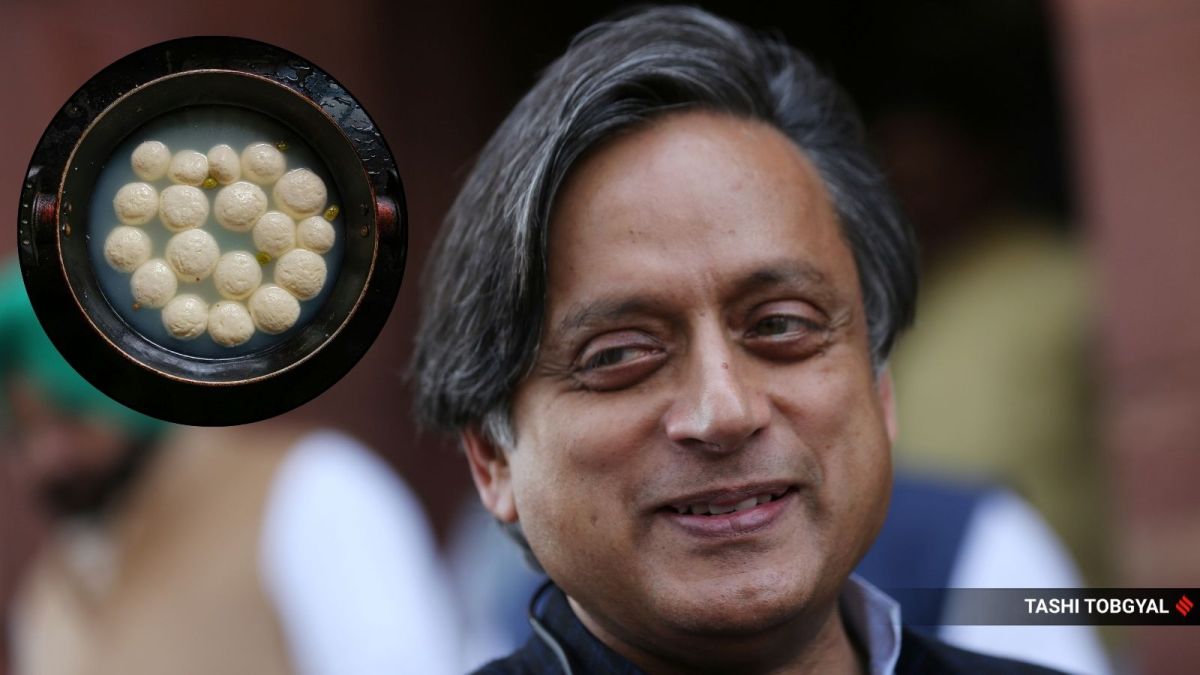
Shashi Tharoor responds to viral idli and rasgulla debateShashi Tharoor defended idli in a viral food debate (Source: Express Photo by Tashi Tobgyal and Canva)

What began as a playful social media debate over rasgulla and idli quickly turned into a larger conversation about food identity, regional pride and the cultural significance attached to everyday Indian dishes. The discussion started after a user named Sayantika posted about Bengali sweets like Misti Doi and Nolen Gurer Rosogolla, wondering how to explain their taste to someone unfamiliar with Bengali cuisine. In response, another X user, @crazyxedi, dismissed rasgulla as “nothing but an idli dipped in sugar syrup” and called it “the most overrated dessert.”

The remark soon caught the internet’s attention, especially after Congress MP Shashi Tharoor stepped into the debate with a characteristically elaborate defence of the idli. Responding to the comparison, Tharoor wrote, “Indeed! To conflate a Rasgulla with an Idli is not just a culinary error; it is a profound cosmological misunderstanding.” He went on to explain why the two foods are fundamentally different, adding, “She is comparing chhena (the delicate, squeaky, pristine curd of milk) with a meticulously fermented batter of parboiled rice and black gram (urad dal). Their compositions are from entirely different kingdoms.”

Tharoor further described rasgulla and idli not just as foods, but as products of entirely different culinary philosophies. “One is an airy, spongy lattice designed to trap light sugar syrup; the other is a dense, wholesome, steamed matrix of complex carbohydrates and proteins. Their taste, consistency, structural integrity, and existential purpose share absolutely nothing in common,” he wrote. He also passionately defended the idli’s cultural and nutritional importance, saying, “The Idli is not a mere ‘bland cake.’ It is a masterclass in biotechnology.”

Highlighting the science and craftsmanship behind fermentation, Tharoor added, “To achieve the perfect Idli is to balance the delicate microflora of wild fermentation over a cold night, resulting in a steamed cloud that is a triumph of gut health, lightness, and nutritional balance.” Calling it “a savoury monolith of South Indian culinary genius,” he argued that idli was “perfectly engineered to absorb the sharp tang of a well-spiced sambar or the fiery depth of a molaga-podi (gunpowder) paste infused with cold-pressed sesame oil or nutritious melted ghee.

He concluded with a humorous but firm defence of the dish’s identity: “To suggest an Idli would even consent to being drowned in sugar syrup is to fundamentally misunderstand its dignity.” Tharoor also remarked, “If this lady finds Rasgullas overrated, argue that on the merits of their sponginess or sweetness. But please, leave the noble, perfectly fermented, steamed majesty of the Idli out of your dessert-table polemics, ma’am!”


The exchange triggered amused and enthusiastic reactions online. One user commented: “Wah Tharoor saab waah maja aa gaye I am gonna eat some idli sambhar now let me order.” Another wrote: “As my eyes perused through this, my brain and belly conspired to ignite within my soul an urgent urge to devour a plateful of Idlis for dinner.” A third user joked: “Well said. Got me thinking though, what if we do dip Idli in sugar syrup. Yum yum.”

On comparing rasgulla to idli

Food author and chef Sadaf Hussain tells indianexpress.com, “The comparison is technically inaccurate because rasgulla and idli are fundamentally different dishes despite sharing a somewhat spongy texture.” He continued, “I don’t think rasgulla is comfort food in that sense. It’s a celebration… whereas idlis are a basic necessity of every morning.”

Indeed! To conflate a Rasgulla with an Idli is not just a culinary error; it is a profound cosmological misunderstanding.

To begin with, the comparison is practically a biological impossibility. She is comparing chhena (the delicate, squeaky, pristine curd of milk) with a… https://t.co/dwYI3p9B2S

— Shashi Tharoor (@ShashiTharoor) May 17, 2026

Concurring, celebrity chef Ananya Banerjee explains, “Rasgulla is made from chenna (curdled milk solids) kneaded into soft balls and simmered in light sugar syrup, giving it a spongy, airy texture that absorbs liquid, whereas idli is a steamed savory cake made from fermented rice and lentil batter, resulting in a grainy, porous structure; the cooking methods differ—rasgulla involves boiling in syrup while idli relies on steaming — and the ingredients, preparation, and mouthfeel are fundamentally distinct, making the analogy misleading.”

Chef Hussain also commented on the broader debate, saying comparisons like these can become unnecessary. He used the example of pancakes and luchi, saying that even dishes made from similar ingredients can be fundamentally different in identity and experience.


The emotional and regional significance

To understand why a comparison between idli and rasgulla sparks such a reaction, we have to look at food as a form of ‘cultural shorthand.’ Alok Singh, founder of Diga Organics and food science expert, Teria Ambedkar Uttar Pradesh, mentions, “When someone calls a rasgulla an ‘idli dipped in sugar syrup,’ they aren’t just making a culinary observation; they are unintentionally stripping away the distinct technical and cultural labour associated with those regions.”

In India, regional pride is often tied to the ‘Terroir’ and the specific techniques perfected over centuries. “The idli is the soul of the South—a symbol of patience, where the batter must sit through the night to capture wild yeasts. The rasgulla, particularly for Odias and Bengalis, represents a historical breakthrough in confectionery. In the 19th century, the Bengali technique of ‘chhena’ (curdling milk) was a revolutionary departure from the traditional Vedic aversion to ‘spoiled’ or split milk.”

When these dishes are trivialised, Singh notes that it feels like an attack on the collective memory of a community. “Food is often the first thing people take with them when they migrate and the last thing they give up as they assimilate.”


What actually makes a well-made idli so difficult to perfect despite its simple appearance?

Chef Hussain said the biggest factor is fermentation. “Everything depends on the fermentation itself.”

He explained that if fermentation goes wrong, the idlis can become dense rather than soft and airy. This is also why homemade idlis may not always turn out like restaurant versions.

“Factors like the rice-to-lentil ratio, fermentation quality, grinding texture, batter aeration and steaming time all have to align perfectly,” says Chef Banerjee, adding that even small variations in climate or fermentation can change the final texture dramatically.

Fermentation: The ancient masterclass in biotechnology

According to Singh, Shashi Tharoor’s description of the idli as a “masterclass in biotechnology” is scientifically spot-on. Long before we had microscopes to see Lactobacillus or yeasts, Indian ancestors mastered the art of “controlled spoilage.”

In the context of Indian food history, he states that fermentation was the original preservation and nutrition-enhancement tool. In a tropical climate, fresh milk or cooked grains would spoil quickly. However, by inviting the right bacteria to the party, our ancestors could not only preserve food but also make it more digestible.

“The science behind the idli is incredible: the soaking of urad dal and rice encourages the growth of Leuconostoc mesenteroides and Lactobacillus bulgaricus. These microbes break down complex starches and neutralise ‘anti-nutrients’ like phytic acid, which otherwise prevent the body from absorbing minerals. This process also creates B-vitamins—essential nutrients that might be lacking in a simple grain-based diet,” he notes.

Historically, he says that this wasn’t seen as “lab work” but as “rhythm.” The placement of the stone grinder, the temperature of the kitchen, and even the touch of the hand (which introduces local microflora) were all part of an ancient biotechnological ritual. “Fermentation allowed for the creation of soft, leavened textures without the need for commercial yeast or chemical baking powder,” 

Try idly dipped in instant coffee.